A Conversation with Adam’s County Poet Laureate Aerik Francis
Welcome to Conversations With Poets at the Colorado Poetry Calendar.
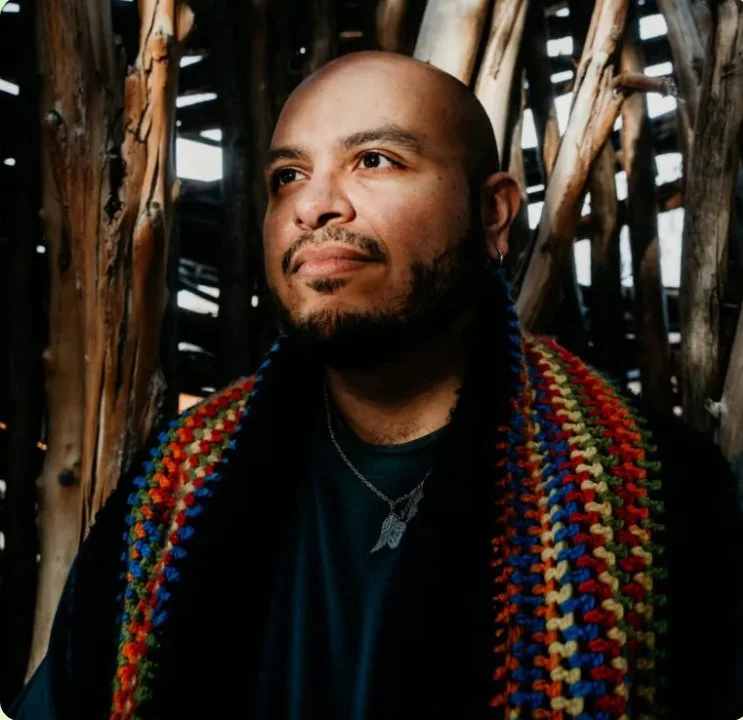
We begin our series in conversation with Adam’s County Poet Laureate Aerik Francis.
I conducted this first interview with Aerik Francis, Adam’s County’s second poet laureate, over text between March 18, 2026 and March 29th. I was excited to talk with Aerik about their upcoming events for National Poetry Month, their new book BODYPOLITIC, and some of their ideas about poetry and what it can do as a connecting force, and ways we can live our poetry.
For more information about and to register for Francis’ upcoming events, visit the Adam’s County Poet Laureate site. You can also view more information at @phantompoet for events in Denver and elsewhere, including a series of book launches for BODYPOLITIC.
About Aerik
Aerik Francis is a poet & teaching artist based in Denver, Colorado, USA. Francis is currently serving as poet laureate of Adams County, Colorado (2025-2027). Aerik is the author of three poetry chapbooks: BODYPOLITIC (Abode Press, March 2026 ), MISEDUCATION (New Delta Review, May 2023), and BODYELECTRONIC (Trouble Department, April 2022 [out of print]). Francis has received poetry fellowship support from SAFTA, the Chrysalis Institute, CantoMundo, and The Watering Hole. They are also a poetry reader for Underblong poetry journal. Francis has poetry published widely, links of which may be found at linktr.ee/aerik as well as their website. Aerik’s social media handle is @phantompoet.
TLC: What can you share about your vision for Poetry, and some of the ways that writers and poetry lovers can help support this vision?
Aerik: I think my vision for poetry is the same vision I have for people: I want us all free and thriving. I want us to exist without concern for money or property. I want us in all of our forms and styles and experiments. And so I think people can support this vision in the greater movement for social justice and oppressive system dismantling. I think that people should feel free to imagine their own unique visions for poetry and all of us can mutually support each other’s unique visions.
TLC: I love this, and thank you for this answer!
Can you name some ways and/or spaces you have noticed this kind of freedom-making already happening?
Do you perhaps have a metaphor in mind for how this kind of being or practicing poetry dismantles oppressive systems?
Aerik: Not sure if it is the same kind of freedom, but this question made me consider moments of poetry that have resonated with me recently. I found a lack of language in my memory, more, a fascination at the feeling. There is something about the middle of a poem, that space between the start and the finish that clarifies the beginning and prepares for the end– the moment someone in the audience feels something enough to respond– a snap, a nod, a hum– when words can become feelings and feelings can become words. I think that’s a freedom. A flighty unstable freedom, but a freedom. I’m not sure how effective it all is, to be honest, but it continues to me to feel like something vital and nourishing, something that keeps me in touch.
TLC: When you say that, I think of spark! And glimmers! I think of these lights as small moments of noticing and potential connection that can happen when we express our own realities. And I wonder if there are some moments that you can point to where your work breaks through and causes ripples of recognition and connection through these or similar kinds of bursts?
Aerik: "Free Freeness" (PRXPAGANDA, 2025) is a poem that continues to teach me new ways to think and engage with it. The title is from a line from the poem "Ossuary III" by Dionne Brand, a poem I heard her read in an online recorded reading & conversation with one of my other all time favorite poets Harryette Mullen in that moment in 2020 when so much was virtual and accessible. At first, "Free Freeness" felt heavy, felt sour and sarcastic when read aloud in a way that bothered me. The freedoms felt true, yes, but awful, and not quite like Brand's free litanies. It needed to ferment. Over time, the poem shared it's music with me, and in the pulses, opened possibility and an invitation– in the face of the awful litany, to feel and feel free. When I read it to audiences now, not only is there a beat that lightens the blows, there is a call and response for the audience to freely say free, to fill the space with free. I like that the music and participation of it all feels freeing, maybe even good, but also simultaneously visceral and disturbing. It has stewed into a sweet and bitter bittersweet, the kind that makes my tastebuds tinkle and shimmy.
TLC: I love that idea that our poems can keep teaching us. Oh! And that fermentation! good for the gut, as we know!
I'm trying to think if I ever thought of poem making that way. More often than not, poetry is for me a bit of a bookmark that I tend to unravel over time, and re-situate, depending on its place in relationship to my life. And that's only if I remember to look back at it.
I personally might try this out as an exercise, sitting with poems to listen for their music. While, I have written many songs, I haven't reimagined most of my poems that started as poems as music. I love this idea that a music coming through our hardest poems can also create modes of connection.
My question: Is this possibility inherent in all of the poems you write?
Aerik: The word “inherent” often makes me nervous and itchy, and so I tried to conditionally logic out if there are inherent musical possibilities in my poetry and this is what I came up with:
If I'm writing a poem, then I’d like it also to be spoken aloud.
If it is spoken aloud, then it will create its own sound.
If it creates its own sound, then it has a particular music.
If it has a particular music, then melodies and harmonies follow.
If melodies and harmonies follow, then a song is made.
If a song is made, then new creations can be generated.
If new creations can be generated, then a new poem can be written
TLC: You and I have talked about singing poets before, and I'm wondering if there are other singing poets who have influenced you — singing poets who are creating something new, like you are.
Aerik: Jamila Woods is a singing poet that really inspires me. I love! love! her album LEGACY! LEGACY! Not only does it honor important Black artists, but it is a gorgeous work of art itself. Other poet-musicians I really like are Faylita Hicks and Danielle P. Williams– who each have new books out! And of course I gotta mention Saul Williams!
Poetry and music together fascinate me because poetry doesn’t have to rhyme (nor reason!) nor does it have to adhere to a time or a rhythm nor does it have to explicitly be spoken or sung. It can be all, it can be none, and it can occupy that interesting liminal space of possibility. I say this all like it is new or novel, and it can really feel that way, but really it is just the history of the lyric, all the way back to Sappho likely reciting poetry accompanied by lyre.
TLC: We are talking a bit about poetry in more forms than one might expect, and I know you have also created some zine projects with your work. Could you tell me a bit more about that, especially since so many of us are prompted to publish in certain valued-by-institutions ways, and because you have done both, and widely.
I am curious about some of the ways that moves in your life (while also acknowledging that institutions are also following suit of zine culture ... uhm ... because it is RAD!).
Aerik: I feel very new in the world of zine-making, and it’s really cool how many awesome and inventive zine artists like yourself there are locally. Zine culture is so rad! Rad as in awesome but also as in radical, grassroots. After seeing all the different kinds of zines at the Denver Zine fest or the Denver Zine Library, I feel there is so much more to explore! My sister has also made really cool [and silly! I love that they can be serious, silly, or anything else!] zines as well, so she is definitely also an inspiration to learn and make more.
TLC: I love Alisha’s Zines!
Aerik: Zine-making came for me as a way to DIY, to give myself the yes I needed, to publish my work totally on my terms and on my schedule. They were also a way to convert my art into money– especially in situations where I was performing for free, zines provided a way for folks to support me and my art. But also, because I make them all myself and there are fewer limitations, I also feel more comfortable giving them out as gifts. I love how flexible they can be for wherever you are in your artist life. And I can include QR codes to the audio versions I make of the poems and put on Bandcamp– so the zine can function also like a lyric book instead of just a poetry collection.
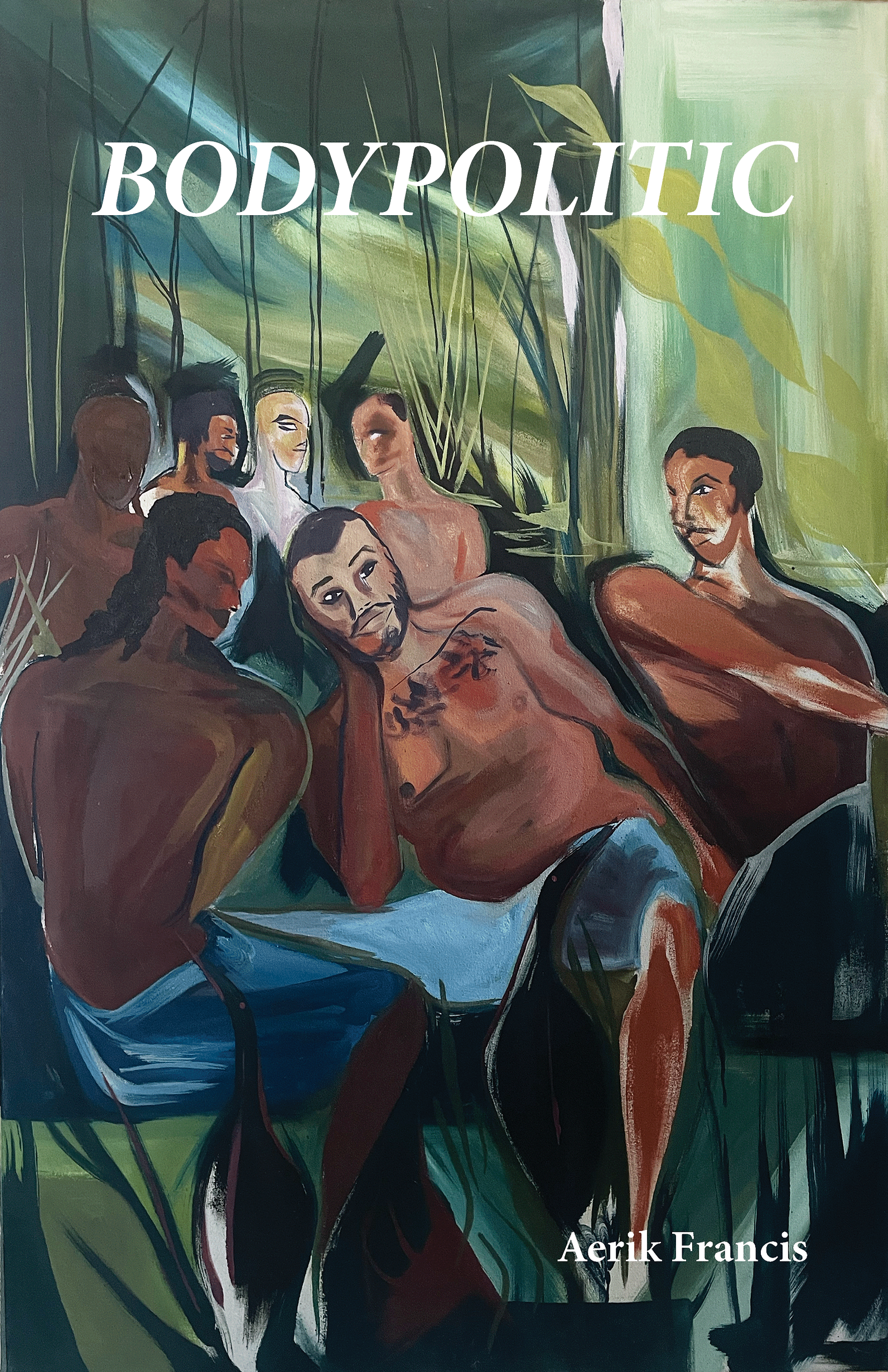
TLC: I don’t want to end our conversation without asking you about your new book BODYPOLITIC from Abode Press.
Something I noticed is that just about every poem in your book is a sort of after poem or unraveled out of lines from the proof of your reading, all of it very good reading. And by reading, I also mean the music you listen to.
There seems to be no separation from the experience of your inner self, your body, and the external that you surround yourself with to be in fluid conversation and in connection.
I see this all in alignment with what you're talking about — connecting generally, and the wish for us all to connect with each other and to see each other more.
So, here’s my not very well formed question: I wonder about this as a practice, which is a very powerful practice, and to me it feels much more alive than a lot of things I have read, which tend to separate on the basis of one who is thinking, to intellectualize, which I think often forgets the body.
But I don't see that here. Because of course our bodies are political, and I just need to tell you I appreciate so much the self-love here, the celebration of, the I-sing-my-bodyness of it.
Aerik: Thank you for this keen observation! As I look back at the collection, the only poem that doesn't really refer to another body of work is “The Limits of Language,” go figure haha.
The more I read, the more I learn that so much is not what it seems, especially when it comes to who gets the credit for achievements and the hows and whys of it all. Actually a great book of poetry that touches on this strange and awful dynamic is Nicky Beer’s book Real Phonies and Genuine Fakes.
I say this all to say that, even as I am reading and writing in solitude, I understand the work of creation to be communal, reliant upon not just other people’s bodies of work, but the people’s bodies that create the bodies of work.
Reference as a poetic practice is something I have been thinking about for a while.
A few years ago at the Sundress Academy for the Arts virtual Trans & Nonbinary Writers Retreat, I got to give my first craft talk, called “Writing Together: The Poetics of Citation.” As someone who had one foot in academia for a while, I became aware of how citations were used as shorthand for argumentative legitimacy, as paths paved by power that place us in line of fire of the so-called canon. During that time I also learned a lot from the Cite Black Women collective/hashtag in that moment, as well as from what Sara Ahmed writes about paths of citation. In studying more about this practice, while citation is a cool word, related to creating movement, like the word incite, but also the word used for legal infractions, I’ve more been preferring the word “reference,” related to the word relate, as in a carrying back, and having a close proximity to the reverence.
The last note is I want to touch on the the I-Sing-The-Body-ness of the project.
For me, so much writing I experience when it talks about the body is very binary. Either the body is negative and a site of trauma, or the body is positive and something to love no matter what. I fall in the in-between, not wanting to take us back to the site of trauma but also wanting to let the body feel what it feels and if it feels bad, that’s okay too, and to sit with the questions of it all.
I think that’s why I lean so much on the music of it all, the emotional complexity, how sad songs can feel amazing or how the happy songs can feel like a synthesis or a transformation of feelings rather than just a blithe bliss.
Photo Credits:
Image 1: Photographer - Anthony Maes for Adams County.
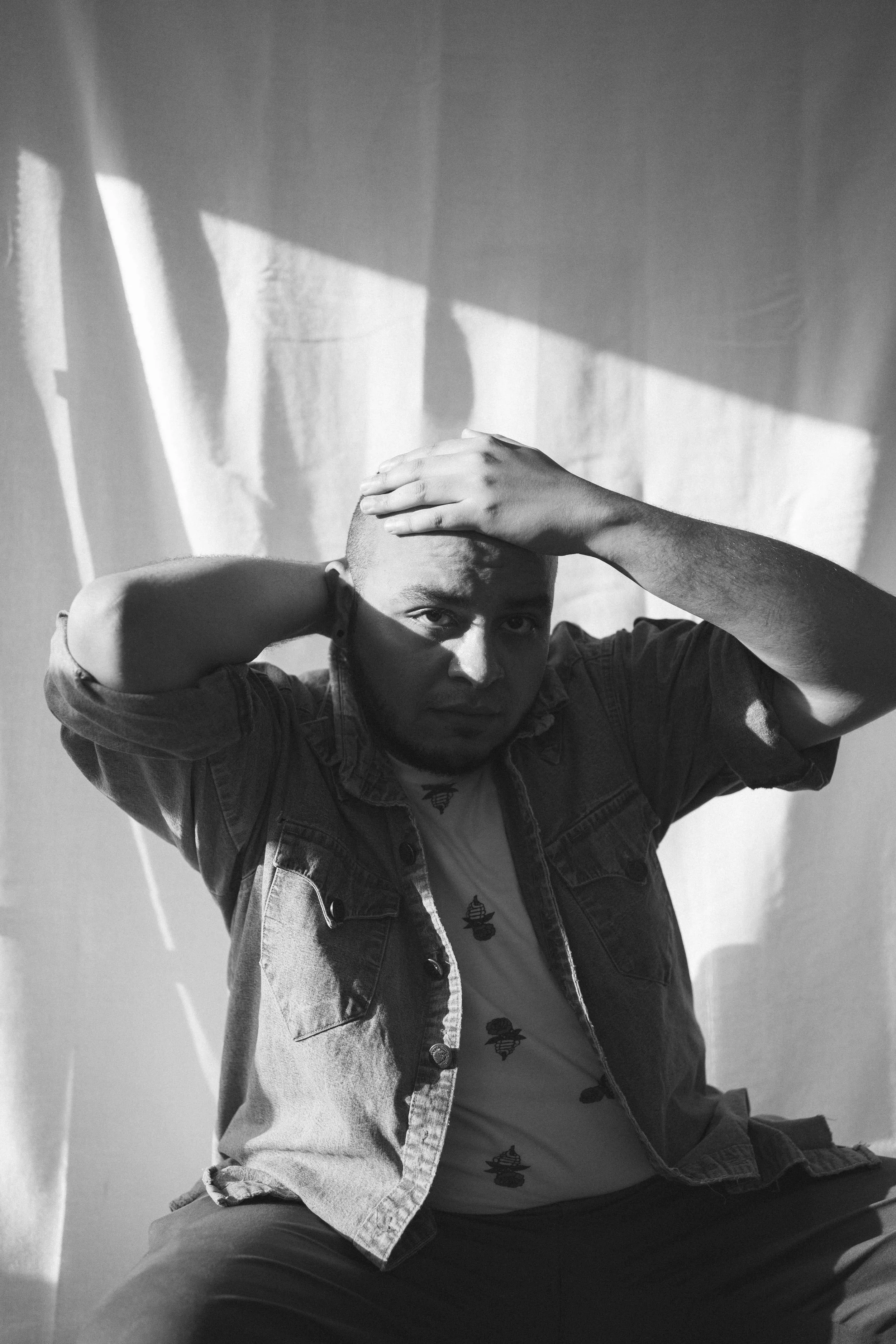
Image 2: Photographer: Sydonne Blake
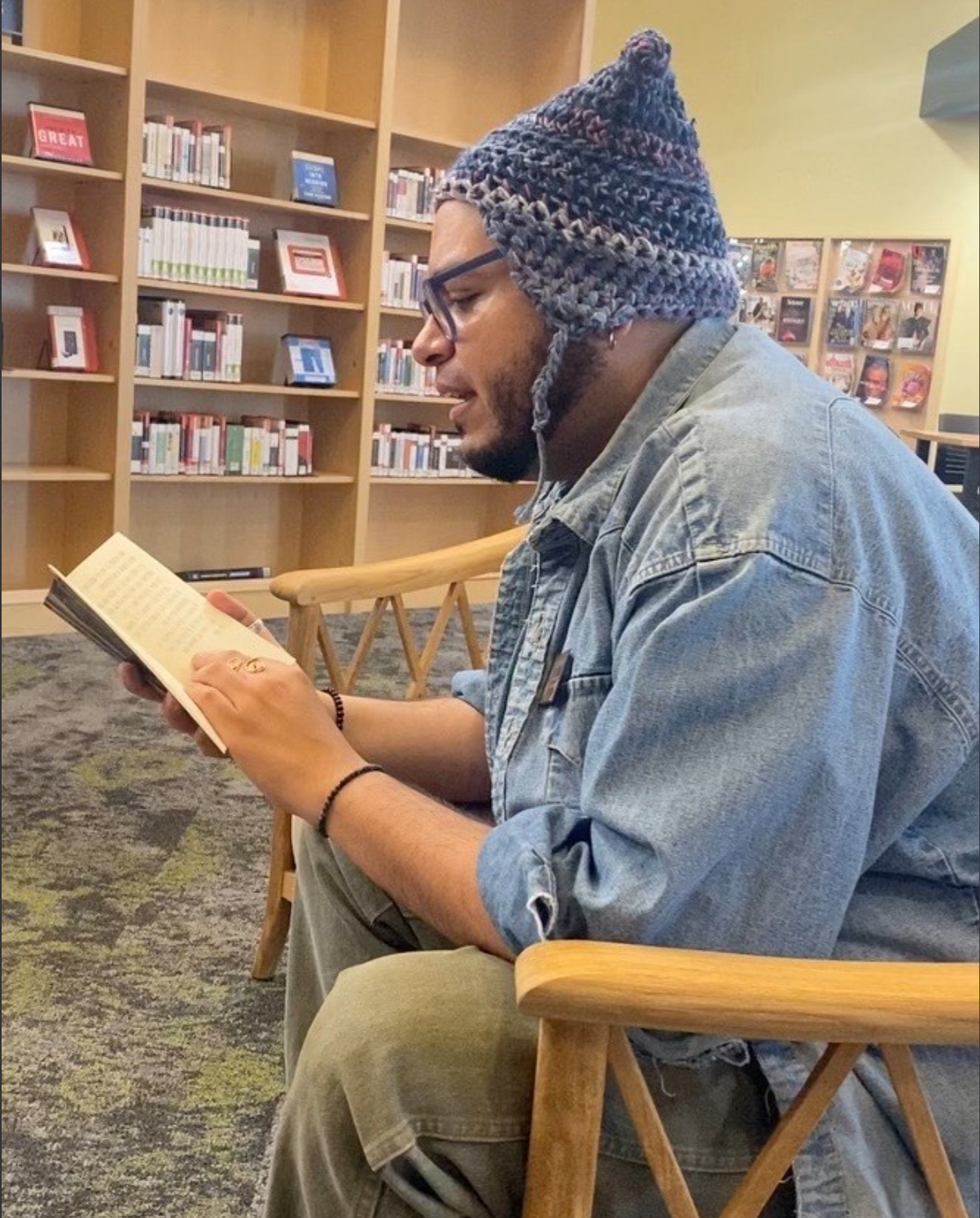
Image 3: Photographer: Alisha Francis
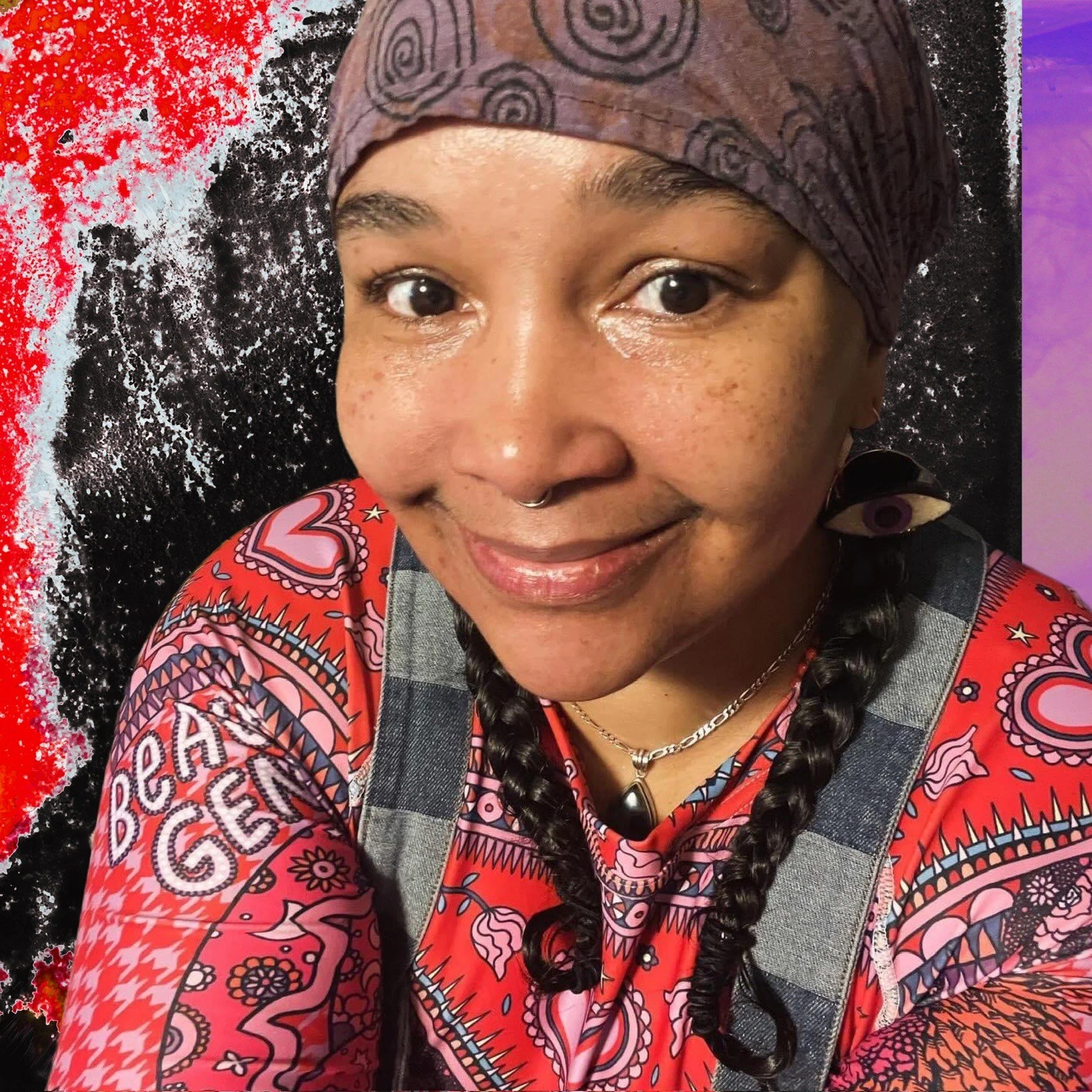
About Meca’Ayo
Meca'Ayo (Tameca L Coleman) is a multi-genre writer, itinerant nerd, sound maker, massage therapist, zine maker, and point and shoot art dabbler who currently lives in Denver, Colorado. Their writing and photography have been featured in literary magazines, art exhibits, newspapers, and other venues and publications on and offline. Some publications of art and writing include DARIA Art Magazine, Femme Salée, Denver Westword, East Window, Rigorous Magazine, The Colorado Independent, Heavy Feather Review, Lambda Literary, just femme & dandy magazine, Inverted Syntax, Full Stop Literary Reviews and Ottawa Design Club. Many of their works implement improvisation and collaboration. Collaborative projects include work with Cellists for Change, Adams County public arts events, and anthology zines and postcards featuring collaborative poetry. Meca’Ayo completed their MFA in poetry and fiction at Regis’ Mile-High MFA program in 2018. Their first book, an identity polyptych, debuted from The Elephants in 2021. They are a current artist resident at CAST 108 Arts Studios in Englewood, Colorado.
Write with us!
Have an article idea?
We are excited about poetry book and project announcements, events, people making poetry alone and together, and much more.
Reach out and pitch us in the form below!